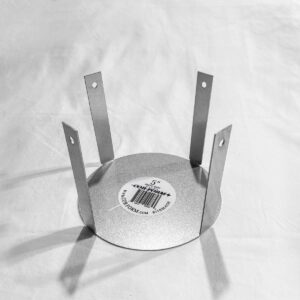
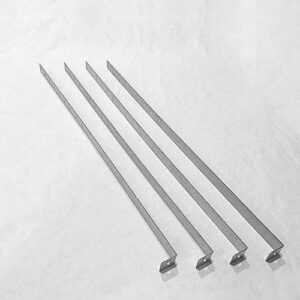
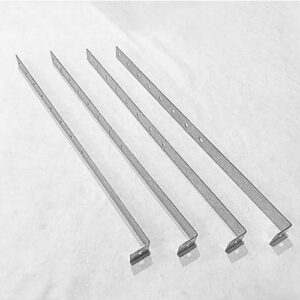
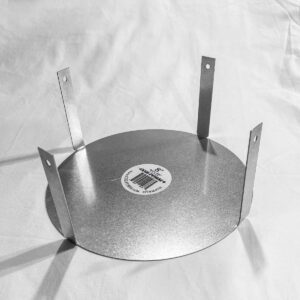
Cor-Form is a breakthrough product for the commercial and industrial construction industry. This proprietary, patent pending product, was designed to greatly reduce the labor associated with infilling core holes that are no longer needed. This product offers a reduction of labor costs up to 80% when compared to conventional methods of infilling core holes and is made 100% in the USA.
Installation of Cor-Form is quick and easy, when properly set up it can be installed in under 5 minutes.. It is simply inserted into the floor so the top of the straps are flush or below the floor level, and is fastened to the side wall of the core hole itself. Once installed and fire caulked, it is quick and easy to infill with the concrete product of your choice. This allows for quick and easy infill of core holes above occupied floors that would otherwise require considerable coordination to access. Even if there is no issue with access to the floor below, this is still a far more efficient method of infilling core holes. The days of searching for ladders, covering desks, and climbing over ductwork to reach the deck below a core hole are over!
To learn more about Cor-Form,
please visit our website at www.cor-form.com.
Standard sizes available to purchase on line Custom sizes available as special order, call for details Wholesale opportunities available to distributers We look forward to helping you increase productivity, one hole at a time!
Cor-Form Installation instructions:
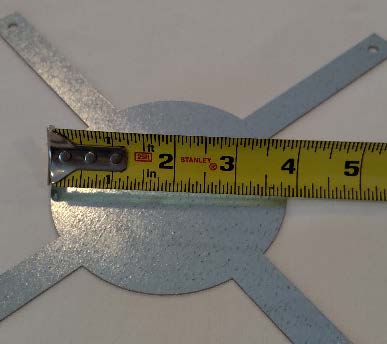
STEP 1:
The Cor-Form measurement is based on the size of the hole intended to be filled. In other words, a 4” Cor-Form is intended to be used to infill a 4” hole in the floor. The dimension of the center circle diameter of the Cor-Form will measure 1/8” less than the actual diameter of the hole. This allows for an easier installation.
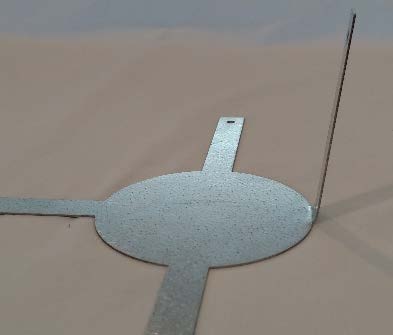
STEP 2:
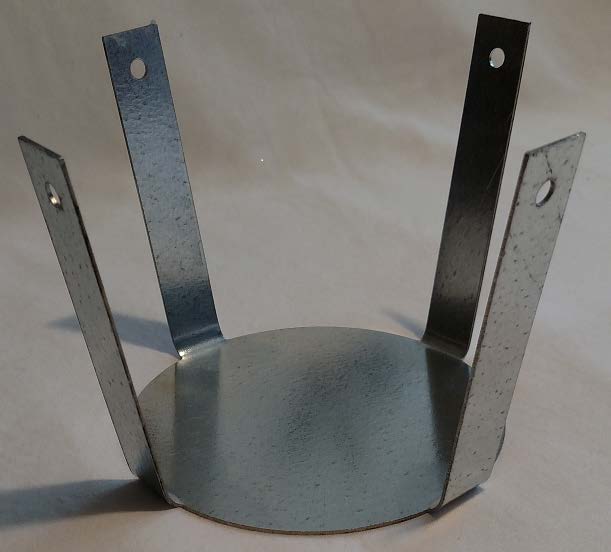
The Cor-Form will be flat and the straps will need to be bent in order to fit correctly in the hole. Each strap should be bent, in the same direction, to about 80 degrees from its original location. By only bending to 80 degrees, the straps will put pressure on the sides of the hole in the floor and hold it in place during installation.
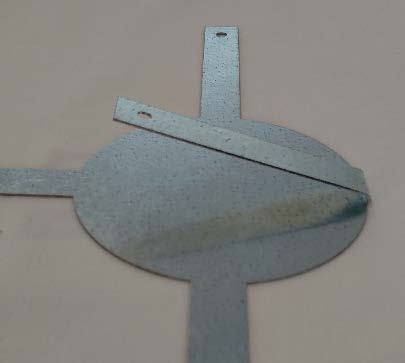
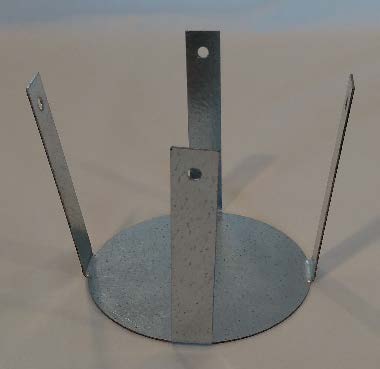
STEP 3:
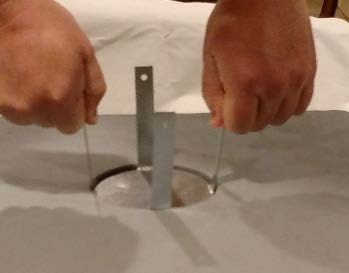
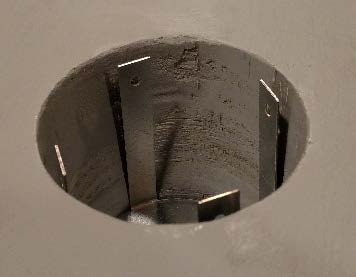
Depending on how tight the bend is at the outside diameter of the circle, you may need to bend the strap all the way over to about 170 degrees from its original position, as shown in first picture, and then bend back to the intended target of 80 degrees from original location. By doing this, you will create a tighter bend at the connection to the circle allowing for easier installation. You can also achieve a tight bend by using pliers or some other tool to help bend the strap. When complete, the Cor-Form should look as it does in the second picture.
STEP 4:
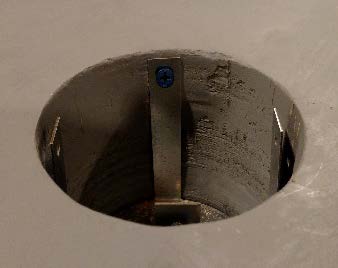
Once the Cor-Form straps are bent into their intended position, you can begin placing the Cor-Form into the hole intended to be filled. Hold two of the opposite straps and push the Cor-Form down into the hole with the sheet metal circle ending up at the bottom of the hole with the top of the straps ending slightly below the finish elevation of the floor.
STEP 5:
Once in place, it is time to fasten the Cor-Form to the sides of the hole. At the
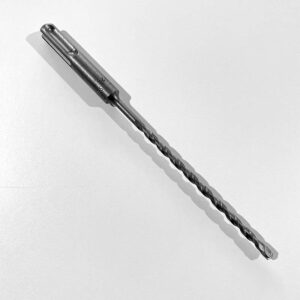
top of each strap, there is a hole provided. Drill a hole in the concrete at each of
these locations into the side of the hole. The size of the hole should be coordinated
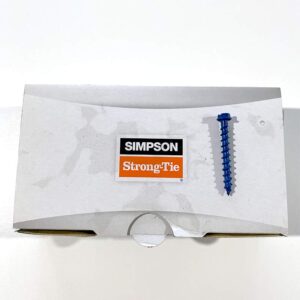
with the size of the concrete fastener being used. There are a number of options for
concrete anchors/fasteners, use what you are most comfortable installing.
Once the concrete anchors are in place, the Cor-Form installation is complete. The following should be taking into consideration during installation Once installation of Cor-Form is complete, it is recommended that a bead of fire rated caulking is installed. The fire stopping should be installed at the outside perimeter of the center circle of the Cor-Form, sealing the gap between the sheet metal base and the side of the hole. Sealing this location will help create the fire separation between floors. It will also keep any liquid from a wet mix of concrete or another fluid cementitious material from leaking past the Cor-Form. It is a good practice to install rods/rebar in the side of the hole, once the Cor-Form is installed, to assist in the shear strength of the core infill. Cor-Form is not a structural component of this assembly; it is intended to be a form to hold the concrete while it cures in place. It is recommended that you use a non-shrink product in an effort to reduce the possibility of separation between the existing slab and the product used to fill the hole. At this point, the concrete product of your choice can be installed in the prepared hole. Read the instructions of the concrete product you are using to determine the length of time it takes before allowing foot traffic, floor prep material, flooring, etc.
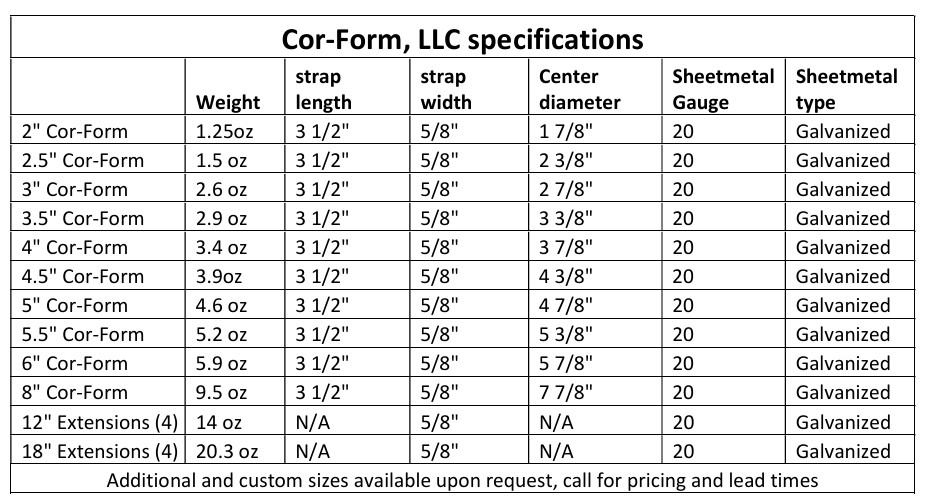
Cor-Form, LLC – Specifications
The following are the specifications for each standard size that is currently produced at
Cor-Form. Additional information is available upon request regarding custom sizes and the
specific details of any custom sizes.
Further information can be found in the following 4 figures that show the Cor-Form
device in multiple configurations. Sketches show the dimensions of all portions of the Cor
Form.
Figure 1 shows the basic patter of the typical Cor-Form device.
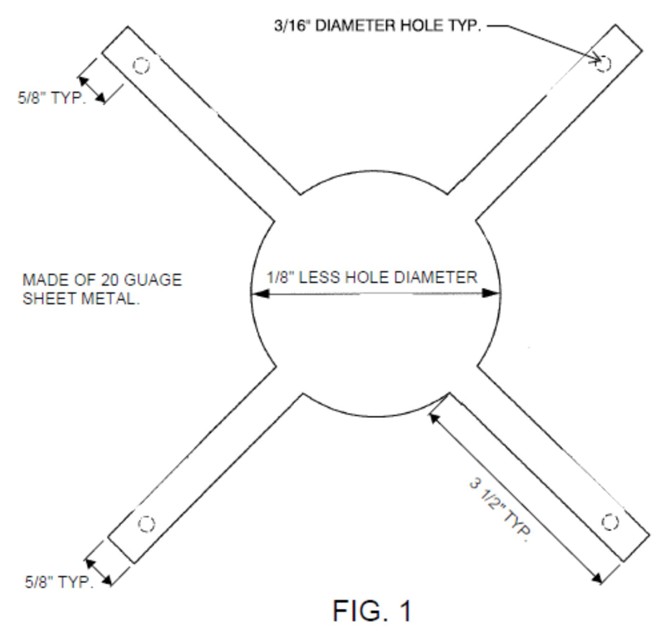
Figure 2 & 3 shows how the Cor-Form device should be bent in order to install into a
core hole. Please refer to installation instructions for further explanation as to how this
product is bent and installed. These instructions are explained at www.cor-form.com and the
web site offers a download of the same information.
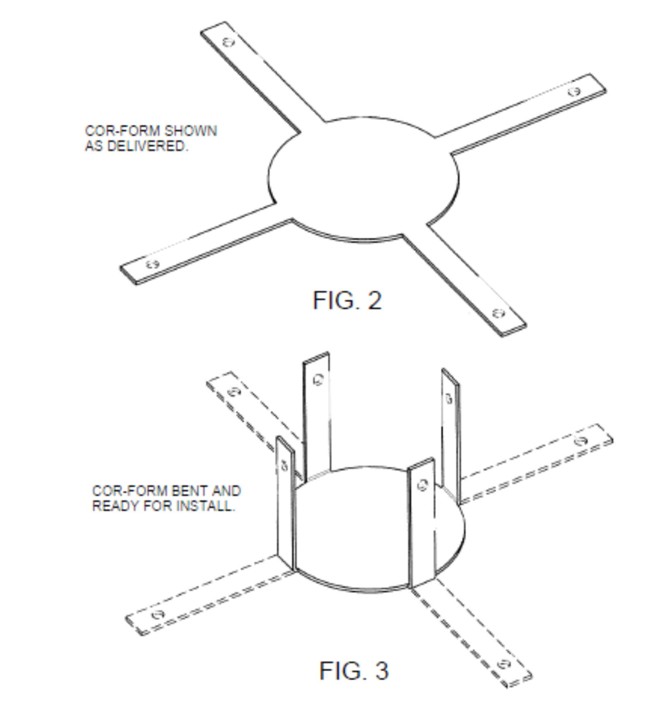
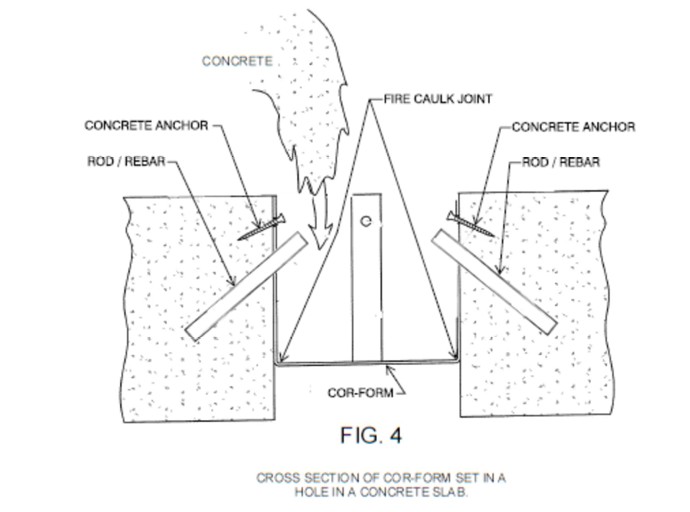
Figure 4: shows a section of the Cor-Form device as installed in a concrete slab. The
rod/rebar is a recommended practice as it will assist in the shear strength of the concrete infill.
The fire caulk joint will serve two purposes and is also a recommended practice. First, it will
help to assure that the assembly will meet fire code requirements once completed. Second, it
will seal the gap between the concrete and the edge of the Cor-Form base. Sealing this gap will
keep any infill product/fluid from flowing past the form and going to the floor below. In this
example, we show using a concrete screw, there are multiple other types of anchors that will
work in this application.